



sales@pj-led.com
0086-13925312260
Introduction
Gyms, yoga studios, and dance studios have very different lighting needs from offices or retail spaces. The people inside are moving, lying down, stretching, and looking up. The wrong lighting can cause discomfort, glare, and even safety issues.
Here are the key design principles we follow when specifying lighting for these active spaces.
1. Bright, Even Light Makes Small Spaces Feel Bigger
Fitness and dance spaces are often limited in size, but people move across the entire floor. A bright, uniform light level reduces shadows and makes the room feel more open and energetic.
The goal is not just “bright” — it’s bright and comfortable. High illuminance with low glare is the target.
Recommended illuminance:
General training area: 300–500 lux
Yoga / dance floor: 300–400 lux
Mirrored walls (for dance): 400–500 lux (to reduce shadows on faces)
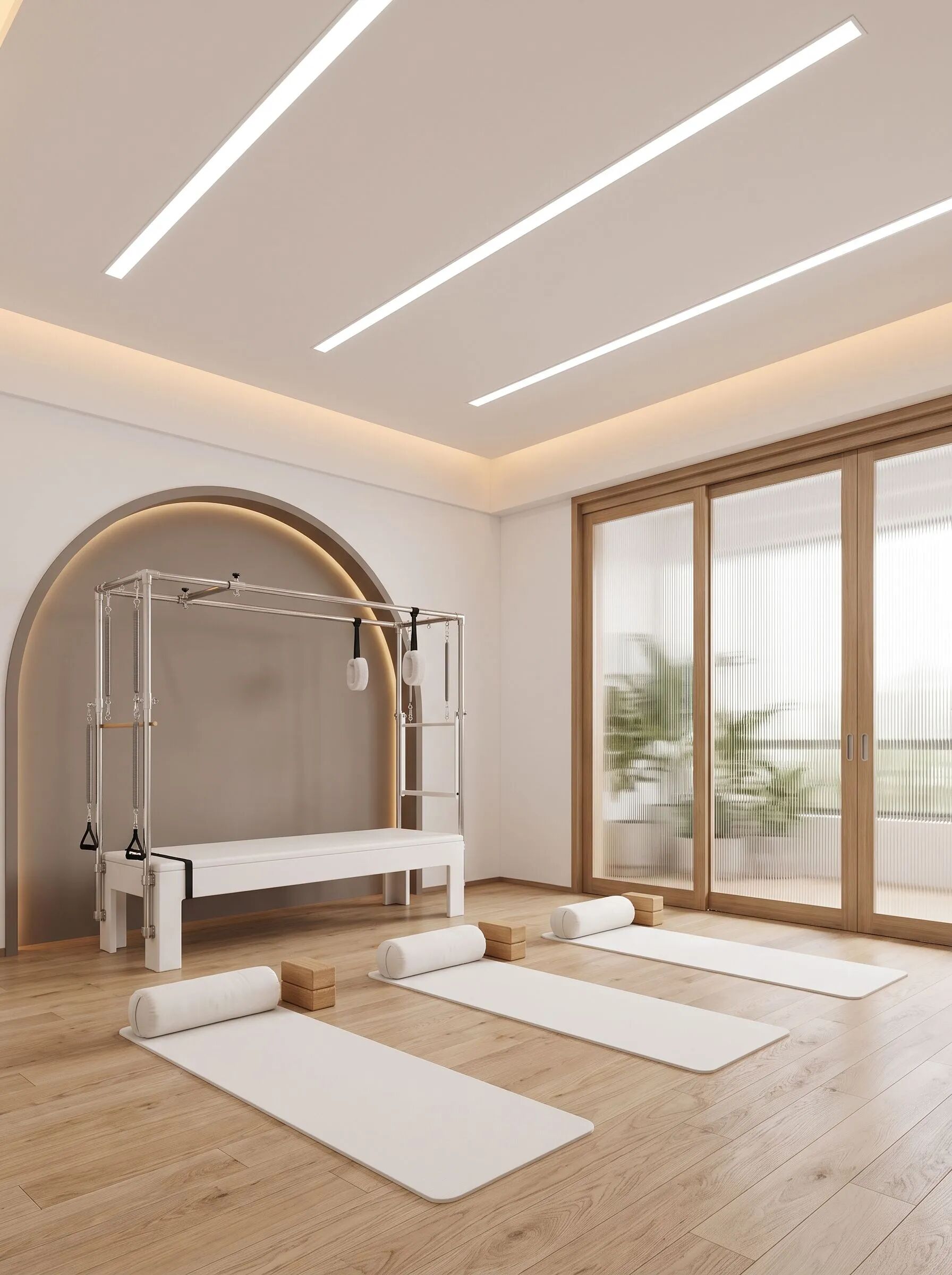
2. Avoid Spotlights and Track Lights — Use Downlights and Small Panels Instead
This is the most important rule for these spaces.
In a gym or yoga studio, people spend a lot of time lying on their backs — doing bench presses, sit-ups, yoga poses, or floor work. If you use spotlights or track lights, the light beam will shine directly into their eyes. This is uncomfortable, distracting, and potentially dangerous.
Recommended fixtures:
Recessed downlights with low glare (UGR < 19)
Small LED panels (300x300mm or 600x600mm)
Linear lights for even coverage
If you must use spotlights:
Choose deep anti-glare models
Angle them away from where people lie down
Use them only for highlighting equipment, not for general lighting
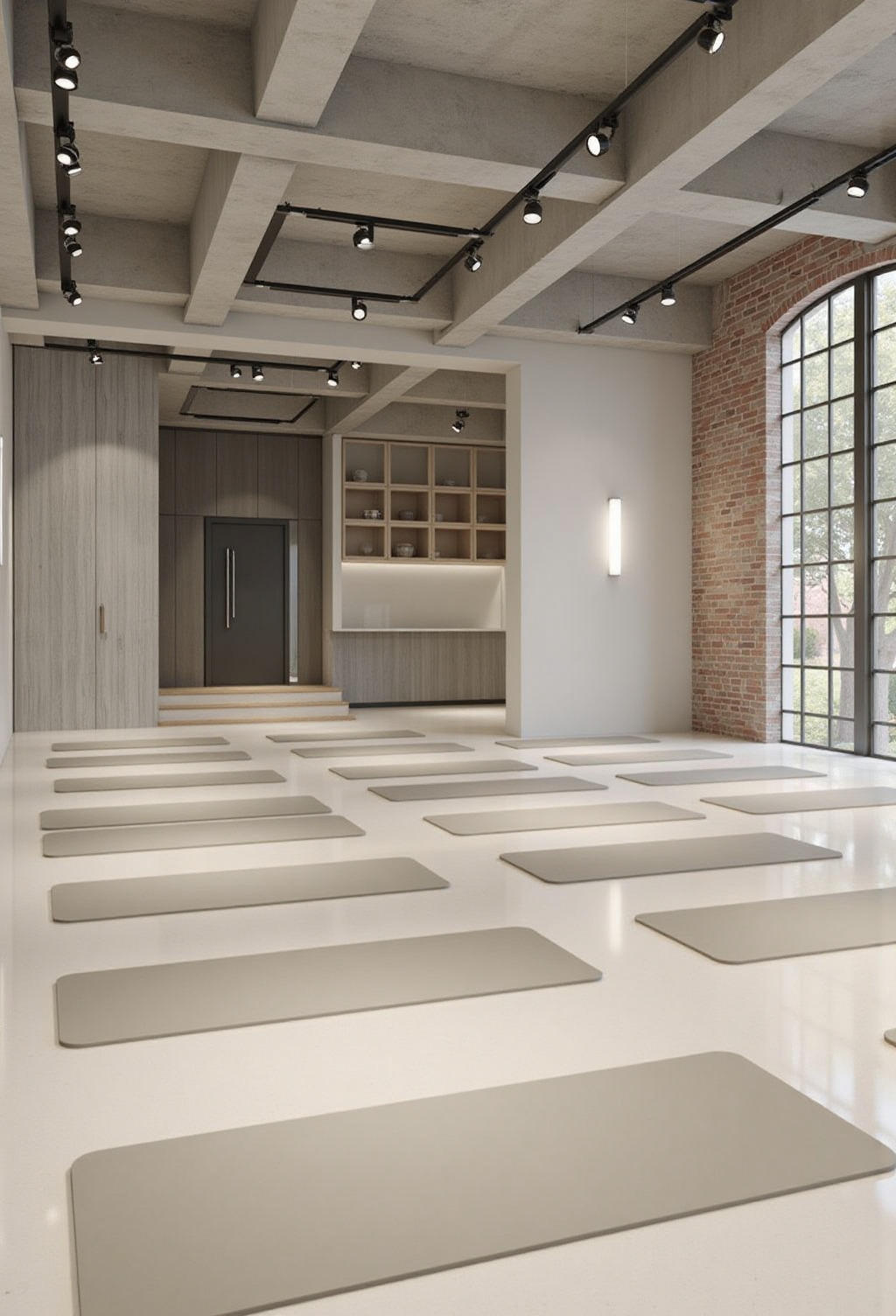
(This is not a good example for YOGA studio)
3. Color Temperature: 4000K–5000K for Most Areas
Color temperature affects mood, energy, and visual comfort.
| Space | Recommended CCT | Why |
|---|---|---|
| Strength training / HIIT | 5000K | Cool white boosts alertness and energy |
| Yoga / Pilates / Dance | 4000K | Neutral white feels calm but still bright |
| Cardio zones | 4000K–5000K | Keeps people awake and motivated |
| 6000K | Not recommended for large areas | Too cold, can feel clinical |
Why 4000K–5000K?
High enough to keep the space feeling active and clean
Not so cold that it feels like a hospital
Works well with mirrors and skin tones
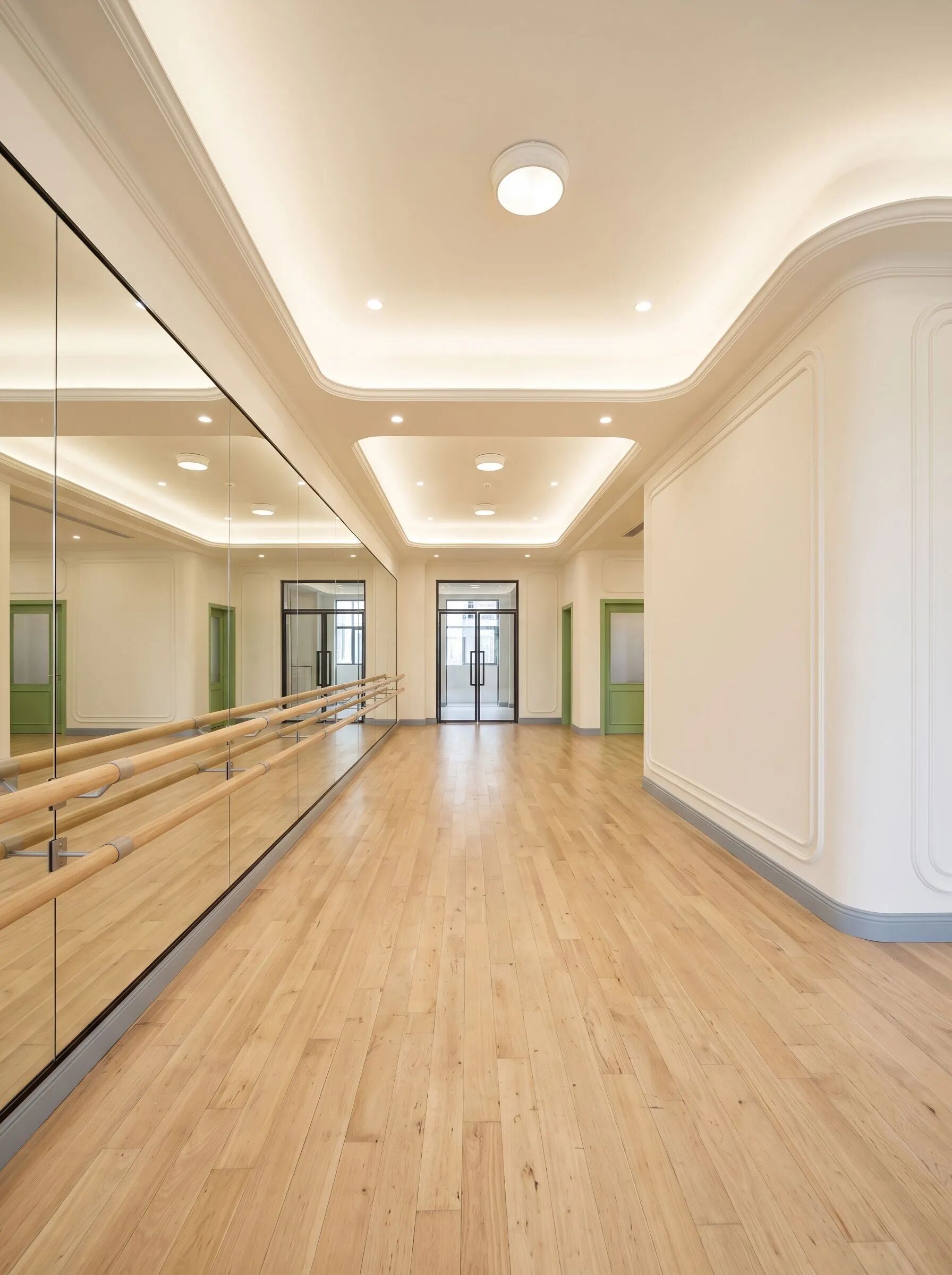
4. Additional Design Tips
Use dimming for yoga and dance studios — classes may need different light levels.
Light the mirrors properly — shadows on faces are a common complaint in dance studios.
Avoid flicker — cheap drivers can cause flicker, which is especially noticeable during fast movement.
Use IP-rated fixtures in areas near water fountains or heavy sweat zones.
Conclusion
Lighting for gyms, yoga studios, and dance studios is not about making the space “look nice.” It’s about supporting movement, comfort, and safety.
Bright, even light. Low-glare downlights. The right color temperature. These three principles will make your space better for everyone who walks in.
Need help specifying lighting for your fitness or dance project?
[Contact us] for a free consultation and product recommendation.

Contact: Miss.Peng
Phone: 0086-13925312260
E-mail: sales@pj-led.com
Whatsapp:0086-13925312260
Add: 5F Block A No.14 North Zhi'An Road Jun'An Town Shunde Foshan Guangdong province